


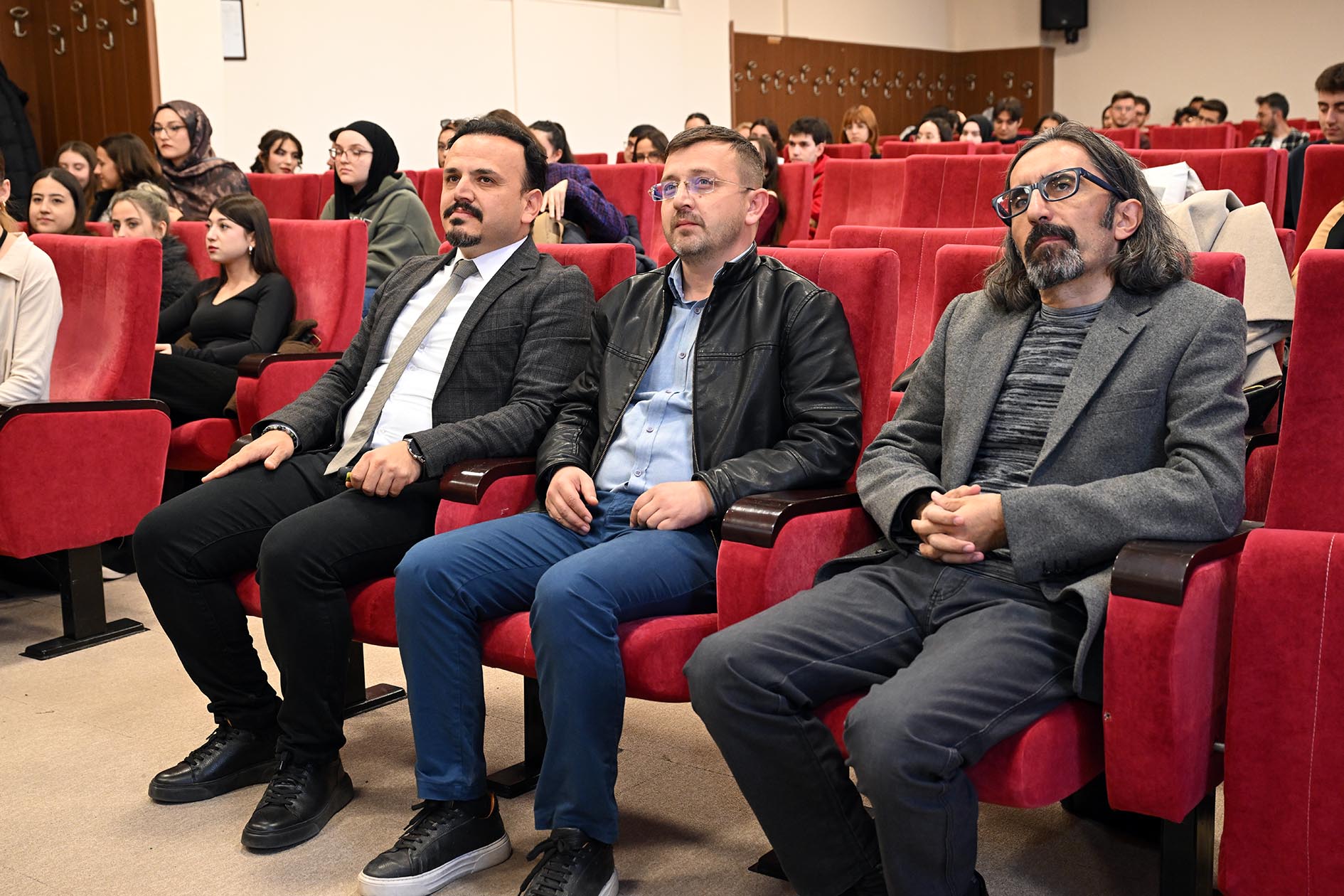
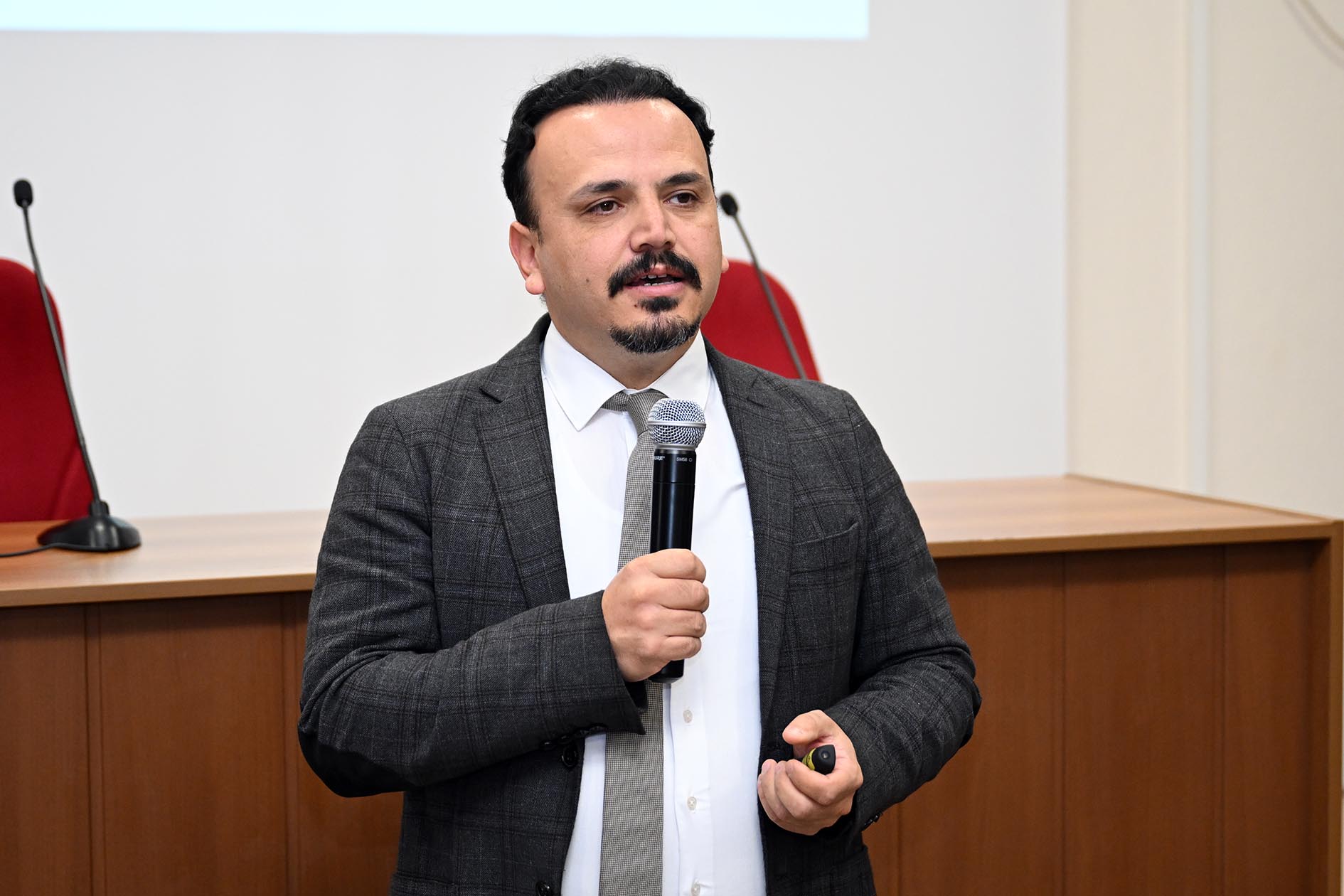
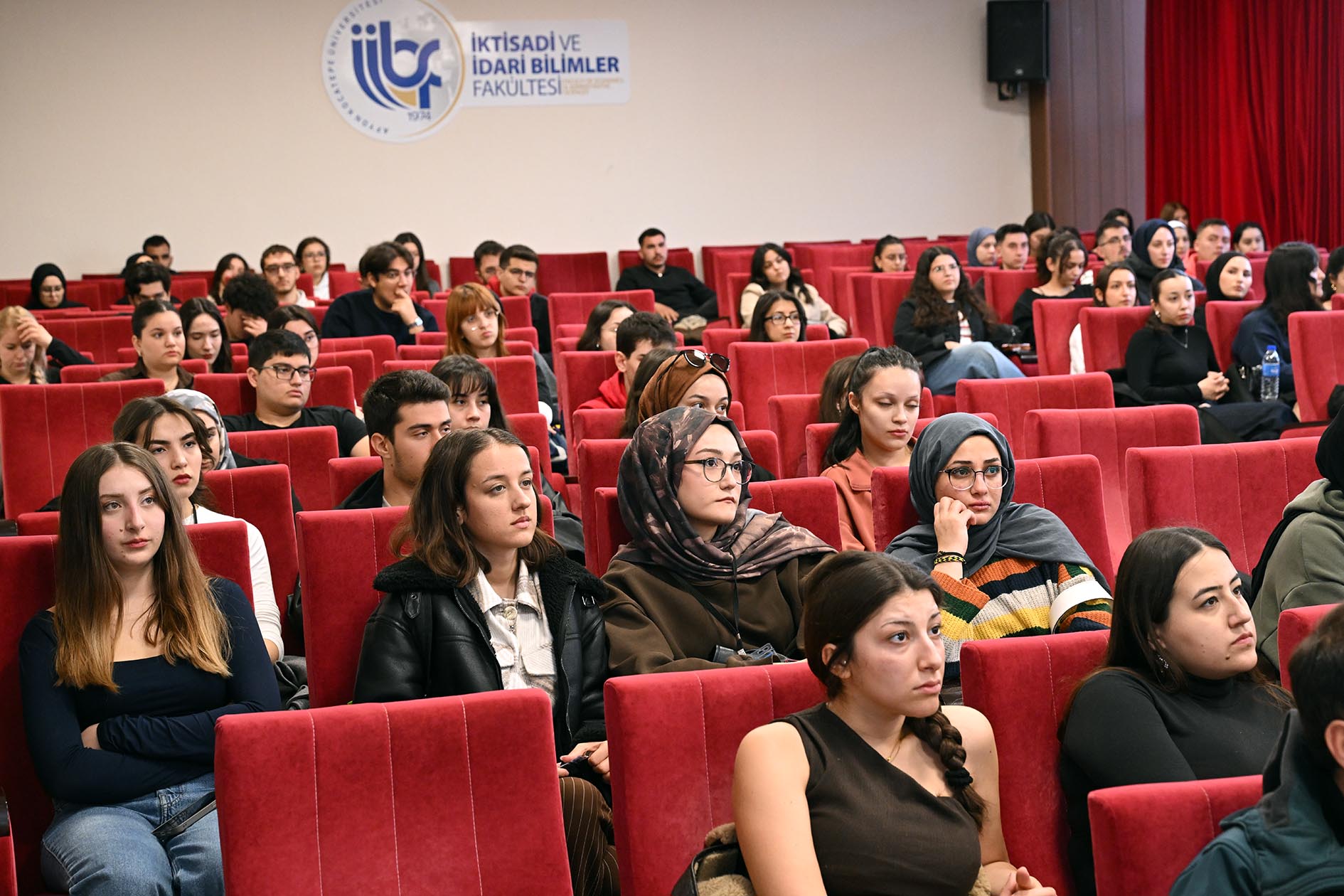
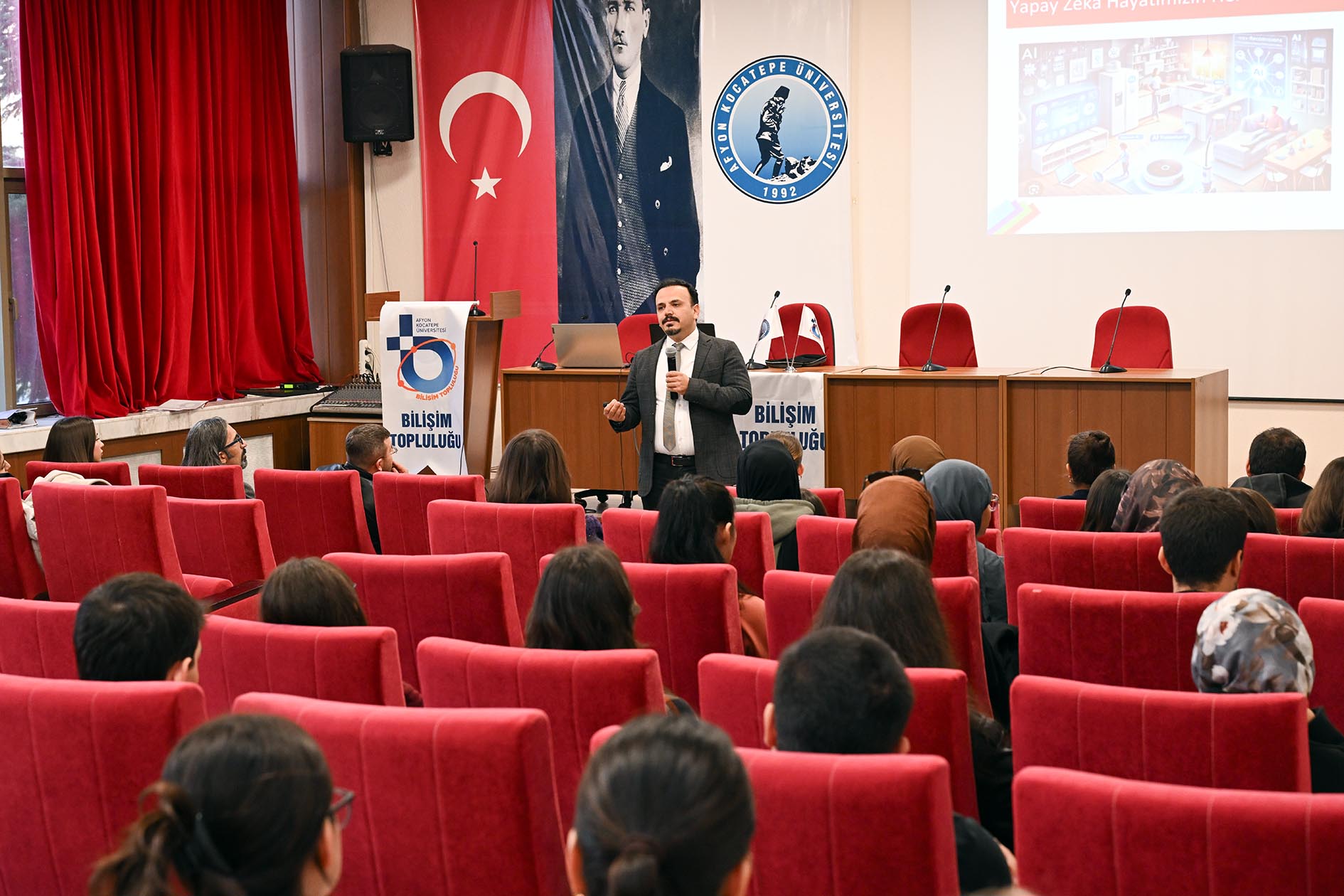
A talk titled “Being a University Student in the Age of Artificial Intelligence” was organized through the collaboration of the Department of Management Information Systems and the Information Technologies Society. Held at the Prof. Dr. Sabri Bektöre Conference Hall, the event featured Assoc. Prof. Dr. Fatih Özdinç, Head of the Department of Management Information Systems, as the keynote speaker. The conference was attended by Dean of the Faculty of Economics and Administrative Sciences Prof. Dr. Gökhan Demirtaş, academic staff, and students.
In his talk, Assoc. Prof. Dr. Özdinç addressed the historical development of artificial intelligence, stating:
“The origins of artificial intelligence date back to the 1950s. Alan Turing is regarded as the father of artificial intelligence, and in the 1950s he posed the fundamental question, ‘Can machines think?’ Although artificial intelligence experienced a period of stagnation in the 1980s, it continued to evolve incrementally in every era.”
Referring to the announcement of ChatGPT by OpenAI in November 2022, Özdinç emphasized that artificial intelligence technologies have since become widely used across numerous domains.
“Artificial intelligence is applied in many fields ranging from agriculture and livestock farming to healthcare, image processing, cybersecurity, finance, banking, autonomous vehicles, and data processing. AI is no longer solely a subject of computer science; it has become a concrete reality and a shared concern of all disciplines. With rapid technological advancements, AI has become unavoidable. Therefore, gaining experience in AI literacy and using artificial intelligence efficiently and consciously are of great importance. It is essential to make informed decisions about AI technologies and to correctly interpret the outcomes they produce. We are moving toward a point where the distinction between what is real and artificial is becoming blurred, making AI literacy critically important.”
“Data Privacy Is One of the Most Critical Issues”
Highlighting that artificial intelligence learns from data generated by humans, Özdinç explained:
“AI systems collect data from various sources; these data are cleaned and transformed into an analyzable structure. Subsequently, models are trained, evaluated, and deployed using appropriate algorithms. One of the major risks in artificial intelligence involves ethical issues and academic integrity. Additionally, AI has the potential to diminish our critical thinking and learning capabilities. Data privacy is among the most critical challenges; boundaries must be clearly and carefully defined. When used improperly, artificial intelligence can create inequalities and generate fundamental concerns about the future.”
“The Future Is Built on Data Science”
Emphasizing the difficulty of predicting safe zones for the future, Özdinç stated:
“We must accept the transformation driven by artificial intelligence. Understanding this rapidly advancing technology and embracing interdisciplinary collaboration are essential. The ability to write basic code has become an important skill across all fields. Regardless of our discipline, we cannot distance ourselves from data science, because the foundation of the future lies in data science. Therefore, we must support our fields with data science and become part of this transformation. Although often perceived as a threat, this technology also has the potential to significantly increase efficiency. New professions such as prompt engineering have emerged, while new areas of expertise—such as AI ethics consultancy and combating AI-related addiction within psychology—are developing. Prompt engineering and critical thinking are becoming the new ‘English’ of the future.”
The event concluded with a question-and-answer session.
 |
 |
 |
 |